Digital Loyalty Card, Loyalty App or a Ready-Made System?
Author
Grow-App
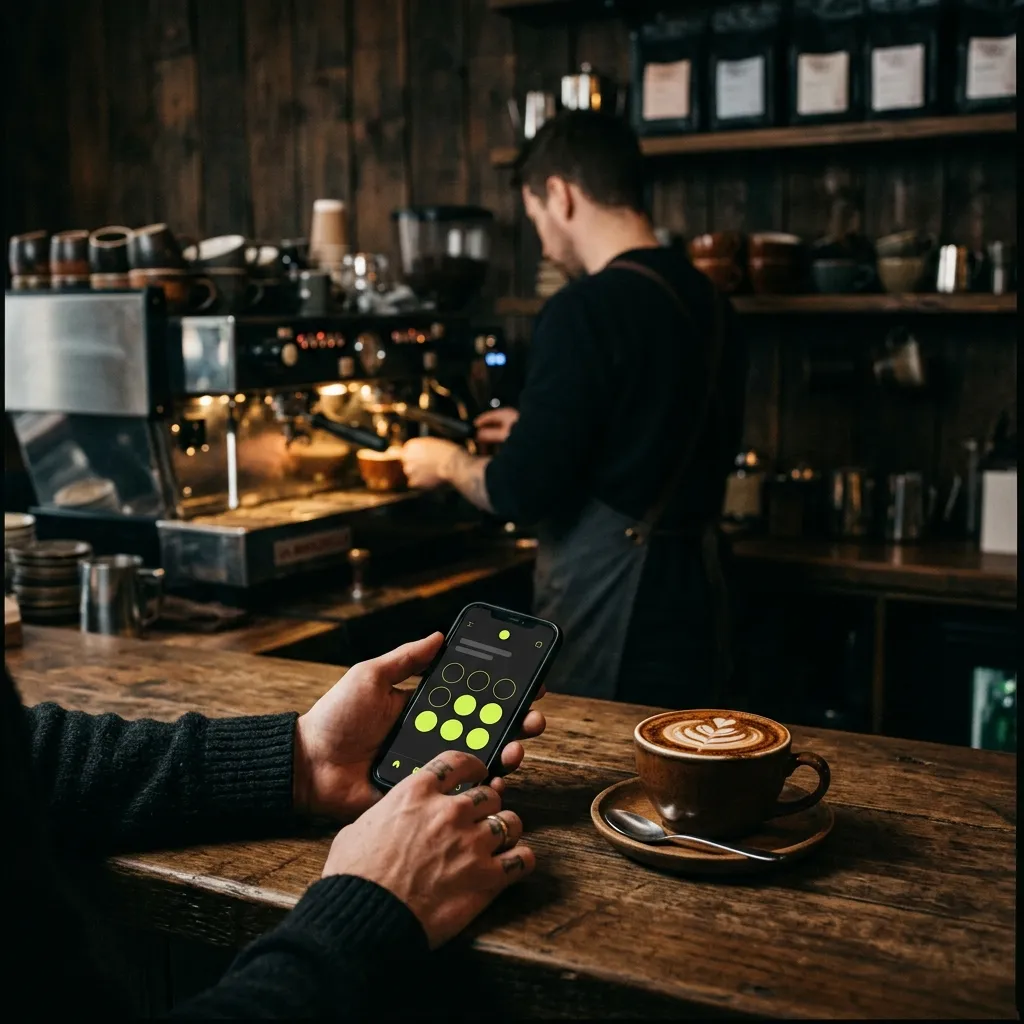
For most cafés, bistros, salons and local shops, the best start is a digital loyalty card in Apple Wallet and Google Wallet through a ready-made loyalty system. Customers don't have to download anything, you pay from nothing to a few dozen a month, and you can launch it in a day. Your own loyalty app pays off when you want to add ordering, bookings, subscriptions or personalised offers under your own brand, and you have enough regulars who will actually use it.
This article is for owners of cafés, bistros, salons, online shops and local stores who hand out paper stamp cards today or are only thinking about a loyalty scheme. We go through four options and their prices, and at the end there's a quick test to show which one fits you.
The four options at a glance
- A paper stamp card. The classic: every tenth coffee free.
- A digital loyalty card on the phone. The same stamp card, but in Apple Wallet or Google Wallet. Customers add it by scanning a QR code.
- A ready-made loyalty system. A service where you set up stamps, points or cashback. It usually includes a digital card, messages to customers and statistics.
- Your own loyalty app. An app with your logo, where loyalty is combined with ordering, bookings and offers.
This isn't a ranking where the last option wins. Each one suits a different business and a different stage.
The paper stamp card: when it's enough
A paper card costs pennies, everyone understands it and there's nothing to set up. For a small café that simply wants to reward its regulars, it's a perfectly legitimate choice.
But it has weaknesses:
- Customers lose it or leave it at home. The stamp is lost and the card stops motivating.
- You don't know your regulars. You can't see who comes, how often, or who has stopped coming.
- You can't reach them. When you launch a seasonal menu, a paper card won't tell anyone.
- It's easy to cheat. A stamp can be copied and you have no way to check.
If none of that matters to you, stick with paper. If it does, a digital card is the logical next step.
A digital loyalty card in Apple and Google Wallet
A digital loyalty card is a card stored in Apple Wallet on an iPhone or Google Wallet on Android. The customer scans a QR code at the till or taps a link, and the card is saved to their phone. Nothing to download, nothing to remember. At checkout they show the card, you scan it, and the stamp is added.
What you gain over paper:
- the card is always with the customer, because their phone is,
- you see how many regulars you have and how often they come,
- you can send them a message, for example about a new offer or that they're one stamp away from a reward,
- stamps can't be faked.
You can't easily produce a Wallet card on your own, though. You need a service that creates and manages it. That's a ready-made loyalty system.
Ready-made loyalty systems: what they cost
There are many ready-made loyalty systems, local and international. Two examples, based on their price lists as of September 2026:
- Loopy Loyalty. A service focused on digital stamp cards. From $25 a month for one location, with cards in Apple and Google Wallet and unlimited push messages. Higher plans cost $69 and $95 a month for more locations.
- BonusQR. A service with a free plan covering unlimited customers and cards in Apple and Google Wallet. On the free plan, though, customers using the BonusQR app also see other businesses nearby. Paid plans cost €19 and €69 a month, adding push notifications and a booking integration. An app with your logo in the App Store and Google Play is offered for €690 one-off plus €69 a month.
Pros of a ready-made system: you start immediately, there's nothing to develop and the risk is small. If the scheme doesn't take off, you cancel.
Cons: your rules have to fit what the system offers. Loyalty is separate from ordering and bookings if you handle those elsewhere. And on free plans customers often see the service's brand more than yours.
Your own loyalty app: what it adds
Your own app carries your name and logo. Customers have it on their phone as your café's, salon's or shop's icon. And above all they can do more in it than collect stamps:
- Order ahead. Coffee to go without queueing, lunch for a set time.
- Book an appointment or a table. For salons and restaurants, loyalty is strongest when it lives in the same place as bookings. More in our articles on booking systems and restaurant table reservations.
- Get offers that fit them. Breakfast regulars get a breakfast offer. Someone who hasn't visited for a month gets a reason to come back.
- Subscriptions or passes. A monthly coffee subscription or a bundle of treatments, for example. More in subscriptions in your own app.
- Push notifications under your name. The message comes from you, not from a third-party service.
An app only makes sense if people actually use it. With our own product, Baby-Care, 70% of parents used the app daily during their first month, because they found something useful in it every day. The same holds for a loyalty app: it has to save customers time or money on every visit.
Comparison: what each option costs and gives you
| Paper card | Digital card via a ready-made system | Ready-made system with a branded app | Your own loyalty app | |
|---|---|---|---|---|
| Launch | immediately | a day | weeks | weeks to months |
| Monthly costs | printing | free to a few dozen a month | one-off fee + monthly fee | maintenance and hosting |
| Customer must download | no | no | yes | yes (or use the web) |
| You know your regulars | no | yes | yes | yes |
| Messages to customers | no | yes | yes | yes |
| Ordering and bookings | no | limited or via an integration | depends on the system | yes, in one place |
| Brand | yours | often the service's | yours, with the system's features | yours only |
You can find current prices for your own solution on the loyalty app page.
What works for a small business?
- A café or bistro with one location. A digital Wallet card through a ready-made system. Quick, cheap, and customers get it without explanation.
- A salon, barbershop or studio. Loyalty here often goes hand in hand with bookings. Check whether your booking system has a loyalty feature built in. If not, a ready-made loyalty system that integrates with bookings.
- An online shop. Points or rewards for purchases are often available directly in your e-commerce platform or its add-ons. A separate app only makes sense with a high volume of repeat purchases.
- A local shop or a small chain. With several locations, ordering ahead or subscriptions, your own app starts to make sense.
Website or app? You don't need to know
If you're considering your own solution, you don't need to know upfront whether you need a website, an app in the App Store and Google Play, or a Wallet card. They're often combined: a Wallet card for new customers and an app for your most loyal ones. We explain the differences in our web vs. app comparison.
When is your own solution worth it? A quick test
Your own loyalty app makes sense if you can answer yes to at least three of these:
- You have hundreds of regulars who visit at least every week or two.
- You want to add ordering ahead, bookings or subscriptions to your loyalty scheme.
- You have several locations and want one scheme for all of them.
- You already use a ready-made loyalty system and keep hitting its limits.
- You want customers to see only your brand, not the service's.
- You want to actively use customer data and send offers based on what people buy.
If you answered yes to only one or two, start with a digital card through a ready-made system. Come back to it once the scheme takes off.
How to start this month
- Pick a simple rule. "Every tenth coffee free" works better than a complex points system. Customers should get it in three seconds.
- Choose a reward that costs you little and delights a lot. A coffee, a dessert, an extra treatment. Not a discount on everything.
- Try a ready-made system on a free plan or trial. Add the card to your own phone as a customer would.
- Put the QR code at the till and mention it. The best promotion is one sentence from your staff at checkout.
- Check the numbers after two months. How many people added the card? How many came back? Only then think about your own app.
Frequently asked questions
What's the difference between a digital loyalty card and a loyalty app?
A digital card lives in Apple Wallet or Google Wallet and customers don't need to download anything. It's mainly for collecting stamps or points. A loyalty app is downloaded from the App Store or Google Play and, besides loyalty, can handle ordering, bookings, subscriptions and personalised offers.
Will customers want to download yet another app?
New customers usually won't, which is why a Wallet card is the better start. Regulars will download an app when it saves them time, for example ordering without queueing or booking with one tap.
Can I start with a ready-made system and move to my own app later?
Yes, and it's a sensible path. When choosing a system, check that you can export customer contacts and their points balances. With those, you can switch without losing anyone.
How much does your own loyalty app cost?
It depends on whether you need loyalty only, or ordering, bookings and subscriptions too. You'll find current prices on the loyalty app page. Before any development we create a design, so you see the solution before you spend money on programming.
Want customers coming back to you, not to someone else's app? See what your own loyalty app can do, or write us a few sentences about your business. No technical brief needed.
Want a solution of your own?
A digital loyalty card, rewards and offers for regular customers — right on their phones, under your name.
You don't need to know whether you need a website or an app. Just tell us what you want to build.